

DeKalb County Timeline of Events
DeKalb County Timeline of Events
1780
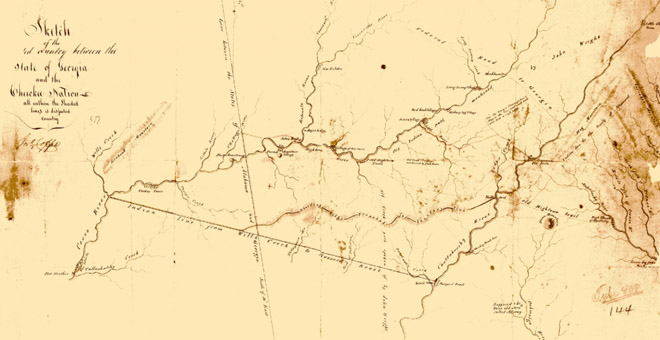
Chief Redhead
American settlers begin to rename areas of the Cherokee Nation. Cherokee Chief Red-Headed Will Weber’s area is renamed Will’s Town, or Willstown – now known as northern Fort Payne and into Valley Head, while Wills County is now present day DeKalb County.
1821
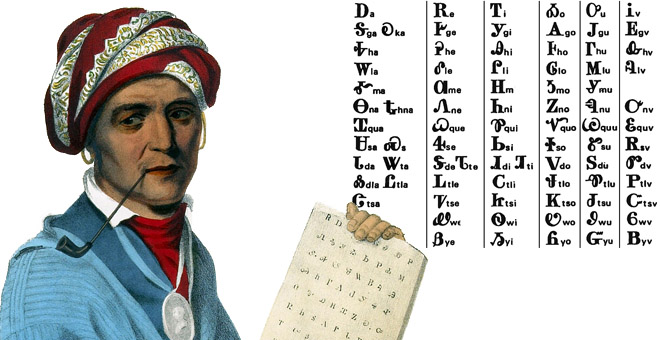
SEQUOYAH
Sequoyah, a Cherokee silversmith, completed his independent creation of a Cherokee syllabary, making reading and writing in Cherokee possible. He moved to Willstown around this time.

1835
NEW ECHOTA TREATY
The Treaty of New Echota was signed, forcibly removing Native Americans and tragically ushering in the Trail of Tears.

1836
DEKALB COUNTY
The county is officially named DeKalb County in honor of Johann Sebastian DeKalb, revolutionary war hero.
1838
CAPTAIN JOHN PAYNE
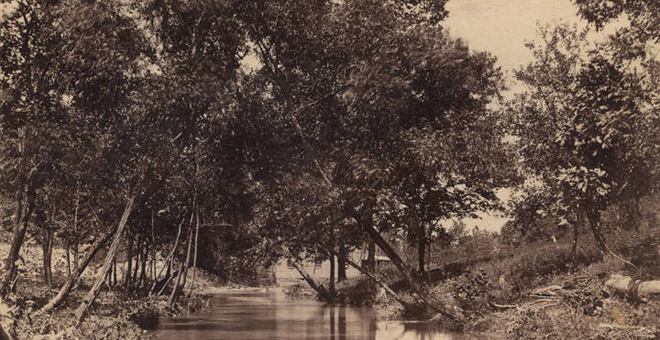
In February, Captain John Payne is commissioned by the Federal Government to command the local soldiers at the garrison built on Little Will’s Creek and see to the construction of a stockade that would hold Native Americans before their march West.
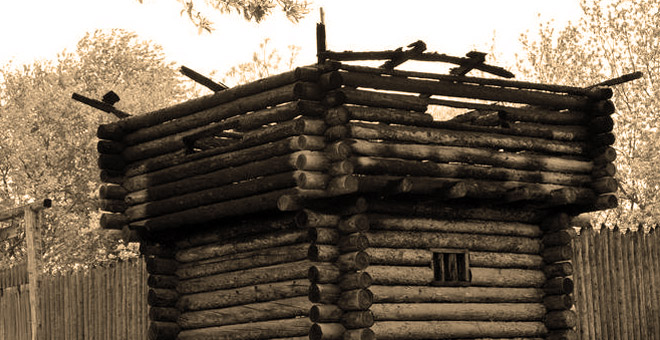
Fort Payne
The stockade’s construction was completed during the spring and named Fort Payne, in honor of its commander.
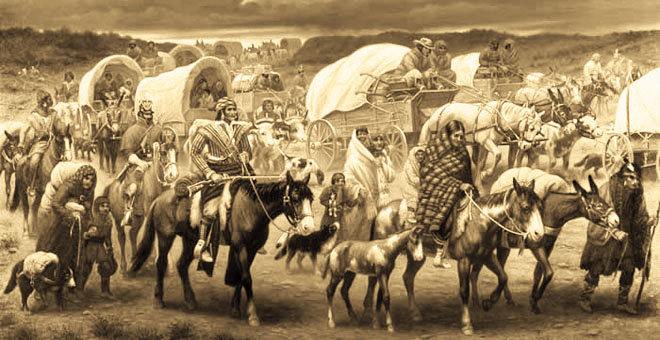
Trail of Tears
The last group of Native Americans departed DeKalb County on the Trail of Tears in October.
1840
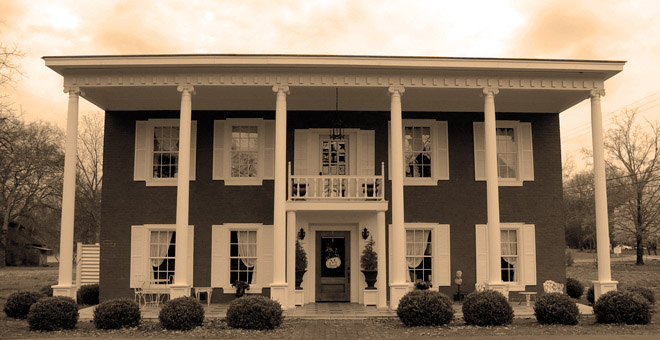
County Courthouse
Lebanon becomes the fifth County Seat in four years, while the first permanent County Courthouse is built. It served as County Seat for 38 years.
1860’s
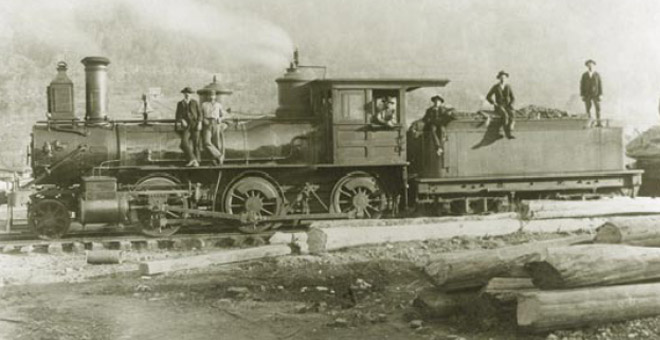
Reconstruction Era
The Reconstruction Era begins in the South, financed by the Northern states, and the first rail transport systems are built in DeKalb County.
1869
An Official City
Willstown officially becomes a city and is named Fort Payne.
1878
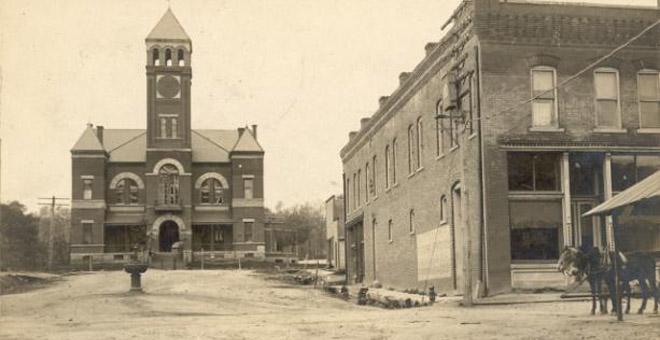
A County Seat
Fort Payne becomes County Seat on May 5th. The current courthouse is one of three in Fort Payne built after 1878.

1885
Unexpected Discovery
Coal and iron ore are discovered within the county.

1888
Boom Days
The Fort Payne Coal and Iron Company is organized and the Boom begins.
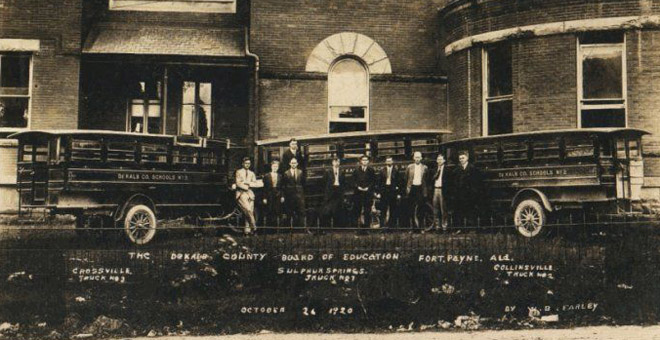
1889
Incorporation
The City of Fort Payne is incorporated on February 28, 1889.
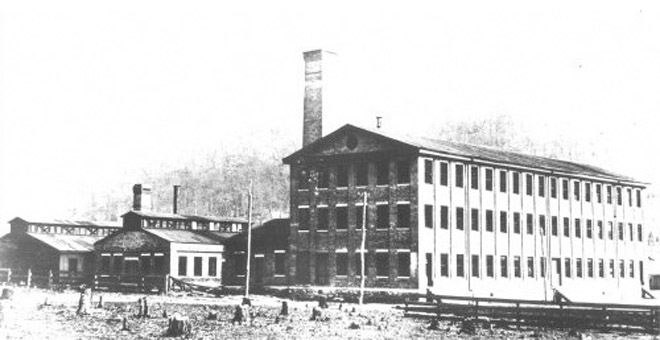
City Landmarks
The Fort Payne Opera House and the Hardware Manufacturing Company’s 3-story brick building is built.
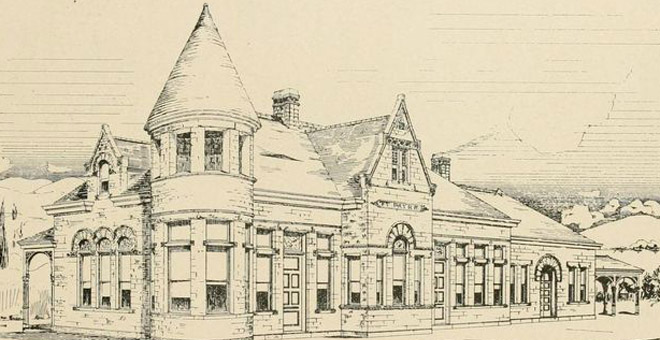
1891
The Depot
The Fort Payne Depot is built.
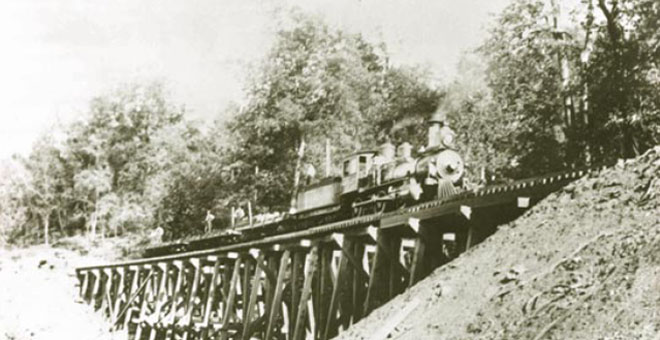
1893
End of an Era
Coal and iron deposits run dry and a larger vein is discovered in Birmingham’s Red Mountain. Investors pack up and move south. The Boom comes to a halt.
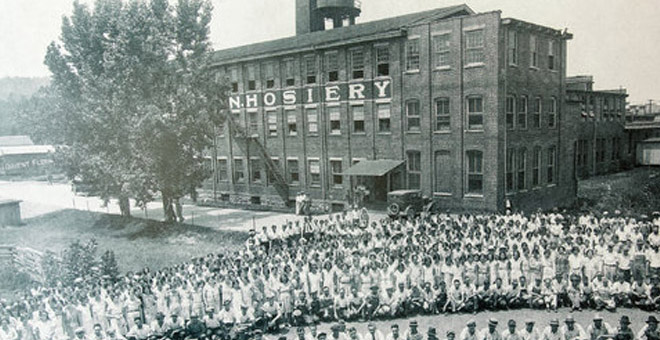
1900
Industrialized Innovation
The industrialization of DeKalb County during the Boom Days – combined with lost jobs and empty mills – creates the perfect conditions to force innovation and give birth to the hosiery industry.
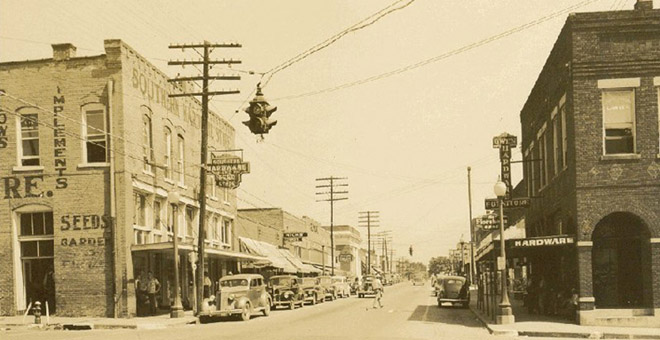
1937
Sock Significance
Many hosiery mills are established, including W.Y. Shugart & Sons, in “The Sock Capital of the World”. Between the first mills converting to hosiery and this time, 125 sock mills were in full production employing about 8,000 people – creating a bustling city and economic boon to the region.
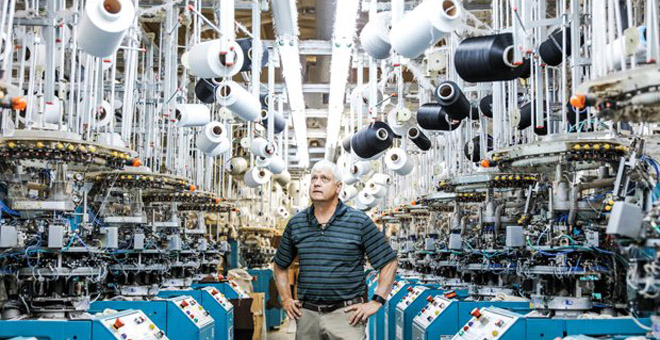
1990’s
A Capital Contender
Over 100 plants, employing over 7,000 people, shipping out over 3-million dozen pairs of socks each week, which was more than half of all socks made in the United States. Fort Payne was officially named the “Sock Capital of the World!”

1992
National Preservation
Little River Canyon becomes a National Preserve.

2007
Shifting Seams
The “Sock Queen of Alabama” helps to save her family business by shifting to an alternate business model: pushing for fashionable, organic socks. The city of Fort Payne is now home to many traditional sock mills as well as more new mills that modernize the industry.
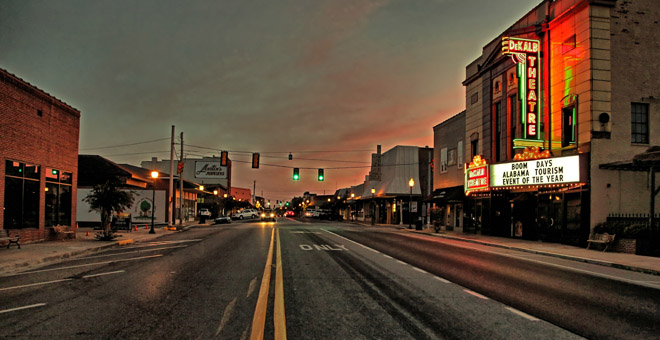
Today
A Civic Community
Civic leaders have taken steps to diversify the economy with several new commercial and industrial projects being developed. Fort Payne also has become recognized as a state Main Street community, appointed by Main Street Alabama.